Which Side Should You Wear a Nose Pin? Left vs Right Meaning in India
If you are about to get your nose pierced, one question comes up before the design, the metal or even the piercer: which side? Left or right isn't just a style choice in India — it carries centuries of tradition, regional meaning and even a link to Ayurveda. Here's a clear guide to help you decide, plus how to pick a nose pin that actually suits everyday wear.
The short answer
There is no single rule that applies to all of India. Broadly: North, West and Central India traditionally favour the left nostril, while South India often prefers the right. Many women today simply choose the side that looks best on their face or matches their dominant sleeping side. All three reasons — tradition, Ayurveda and personal style — are valid.
Why the left side is most common
The left nostril is the most widely chosen across India, and several threads of meaning overlap to explain why.
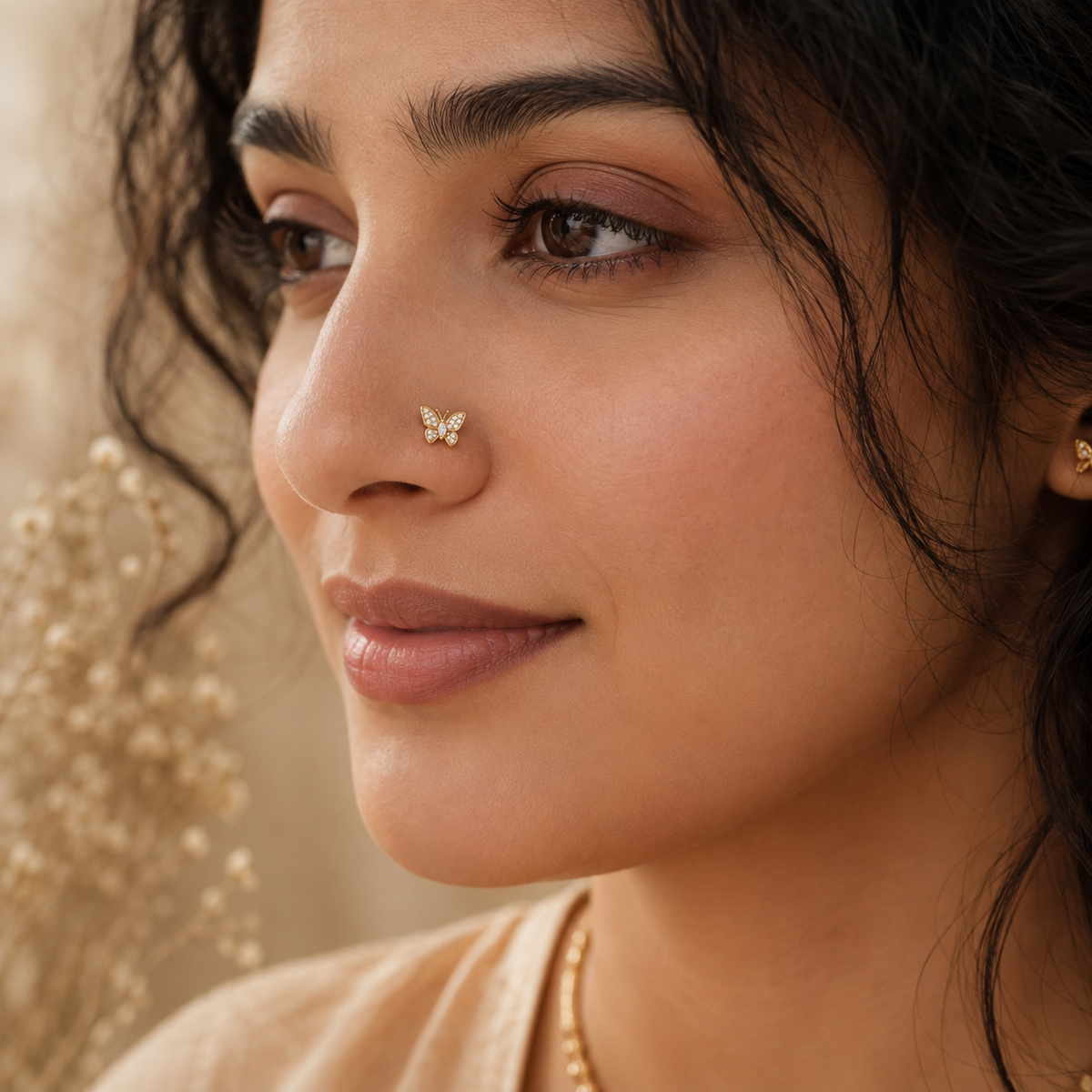
Devotion to Goddess Parvati. In Hindu tradition, Goddess Parvati — the symbol of marriage, energy and motherhood — is often depicted wearing a nose ring on the left side. Piercing the left nostril is seen by many as a homage to the divine feminine.
The Ayurveda link. Ayurveda associates the left nostril with the Ida Nadi, described as the cooling, feminine, lunar channel connected to the female reproductive system. This is the origin of the long-held belief that a left-side piercing may ease menstrual discomfort and childbirth. Treat this as cultural belief rather than medical fact, but it is one of the most-cited reasons the left side became the norm.
Where the right side is traditional
In parts of South India — and in some Nepali and regional customs — the right nostril is preferred. In the framework of nadis, the right side connects to the Pingala nadi, the warm, active, solar channel. So the tidy "left for women, right for men" line you sometimes see online is an oversimplification; the real picture is regional and varied.
A few state-specific notes
- Maharashtra: the cashew-shaped nath is traditionally worn on the left.
- Gujarat & Rajasthan: ornate floral nose ornaments appear during weddings.
- West Bengal & Odisha: a circular ring style is traditional.
- South India: the right nostril, and sometimes both, are common.
These are patterns, not strict rules — plenty of families happily break from their regional norm.
What about wearing both sides?
Double nostril piercings, once mainly seen in tribal and folk cultures, are now a fashion-forward choice among younger wearers. A tiny stud on each side, or a stud paired with a delicate hoop, reads modern and balanced. If you like the idea, start with one side, let it heal fully, then add the second.
Choosing a nose pin once you've picked a side
The side matters less for comfort than the fit and metal. A few things worth getting right:
- Metal: for sensitive or newly-settled skin, stick to genuine sterling silver rather than cheap alloys. Every 925 Ananta nose pin is made in hypoallergenic 925 sterling silver, so there's no nickel or brass to irritate the skin.
- Fastening: screw-back studs stay put through daily wear and are ideal for first-time-after-healing swaps.
- Scale: a small solitaire or floral stud suits everyday wear; save ornate curved styles for festivals and weddings.
If you want a subtle daily piece, the clip-on floral nose pin (no piercing) is an easy way to test the look on either side before committing. For pierced wear, browse styles like the Kite White CZ nose pin or the classic Round Bezel Halo nose pin.
The bottom line
Left honours the most widespread Indian tradition and the Parvati–Ayurveda association; right follows South Indian and some regional customs; both is a modern, stylish statement. There's no wrong answer — only what feels right for you. Once you've decided, explore the full range of 925 sterling silver nose pins at 925 Ananta and find a design that frames your face beautifully.
Planning to change your jewellery soon? Read our guide on how long a nose piercing takes to heal and when it's safe to change your nose pin.